
Let’s be completely honest. The traditional sysadmin is dead.
You cannot survive in 2026 just by SSHing into a Linux server and manually updating a few packages. Remote startups do not have physical server rooms. They run on massive, abstracted cloud architectures. If you lack the required Docker and Kubernetes skills for remote DevOps roles, you are entirely unemployable.
Hiring managers are completely exhausted by candidates who claim they know “cloud computing” but cannot write a simple YAML file. They do not want generalists. They want highly specialized operators. They need engineers who can build, break, and scale complex containerized systems without destroying the production environment.
If you want a high-paying remote career, you must adapt. You must master the exact Docker and Kubernetes skills for remote DevOps roles that enterprise companies demand.
Here is the hyper-realistic, brutally honest breakdown of what you actually need to learn to get hired.
Table of Contents
Why Docker and Kubernetes Skills for Remote DevOps Roles Are Non-Negotiable
Cloud adoption is not slowing down.
Every major enterprise application is now built as a microservice. They are broken into tiny, independent pieces. To run efficiently, these microservices must be containerized. When you analyze the job market, you realize that Docker and Kubernetes skills for remote DevOps roles form the absolute foundation of modern infrastructure.
Without containers, software deployments are a complete nightmare. With containers, developers can write code locally on a MacBook Pro, and it runs perfectly on a massive AWS cluster.
But managing ten thousand containers manually is impossible. That is why orchestration is mandatory. Developing strong Docker and Kubernetes skills for remote DevOps roles proves you understand how to automate deployment, scaling, and networking at a massive scale.
If your resume lacks these tools, Applicant Tracking Systems will instantly reject you. Period.
The Reality of Docker in 2026
Docker is not just a resume keyword.
Knowing how to type docker run on your terminal is the bare minimum. It will not get you a job. The baseline Docker and Kubernetes skills for remote DevOps roles require deep understanding of image architecture and system security.
Junior developers build massive, bloated images containing unnecessary operating system files. Senior DevOps engineers use multi-stage builds. They strip out everything except the compiled binary. This makes the image incredibly lightweight and extremely secure.
You must understand how to optimize a Dockerfile. If a company uses Node.js, your container should use an Alpine Linux base. You must remove package managers after installing dependencies. You must run the container as a non-root user.
Security scanning is also a daily requirement. You must know how to use tools like Trivy to scan your images for vulnerabilities before they ever hit a production registry. True Docker and Kubernetes skills for remote DevOps roles involve defense-in-depth methodologies, preventing attacks before the code deploys.
Kubernetes: The Beast You Must Tame
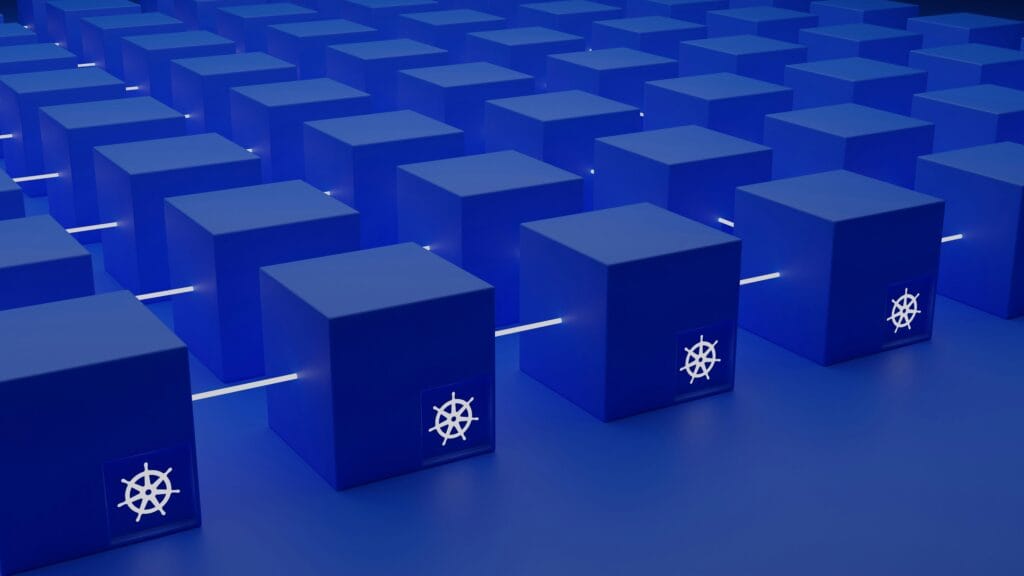
Kubernetes (K8s) is the undisputed king of orchestration.
It is incredibly complex. It has a vertical learning curve. But mastering it is the most lucrative investment you will ever make. The highest paying Docker and Kubernetes skills for remote DevOps roles revolve entirely around deploying and maintaining highly available K8s clusters.
You will rarely build a cluster from scratch using raw servers. Instead, you will use managed services. You must deeply understand how to configure Amazon EKS on AWS, Azure AKS on Microsoft Azure, or Google GKE on Google Cloud.
A hiring manager wants to know you can write complex Kubernetes manifests. You must understand Pods, Deployments, Services, and Ingress controllers.
If a pod crashes due to a memory leak, how does Kubernetes know? You configure Liveness and Readiness probes. When testing candidates for Docker and Kubernetes skills for remote DevOps roles, engineers will aggressively ask you how you handle application health checks and auto-scaling events. If you cannot explain Horizontal Pod Autoscaling (HPA), you fail the interview.
Helm Charts and Package Management
Writing raw YAML is painful. It is highly prone to human error.
To prove you have advanced Docker and Kubernetes skills for remote DevOps roles, you must master Helm. Helm is the package manager for Kubernetes. It allows you to template your configurations.
Instead of writing fifty separate manifest files for staging and production environments, you write one Helm chart. You pass different variables depending on the environment. This drastically reduces configuration drift.
When you apply for jobs, highlight your ability to build custom Helm charts. Employers actively seek out candidates who use Helm to streamline massive application deployments. It shows immense engineering maturity.
CI/CD Pipeline Integration
Containers do not magically deploy themselves.
The core of your daily workflow involves building robust Continuous Integration and Continuous Deployment (CI/CD) pipelines. Your Docker and Kubernetes skills for remote DevOps roles are completely useless if you cannot automate the delivery process.
When a developer pushes code to GitHub, your pipeline must immediately take over. It should automatically run tests, build the Docker image, scan it for vulnerabilities, and push it to a private registry like Docker Hub or AWS ECR.
Next, the pipeline updates the Kubernetes cluster. The industry standard right now is GitOps. You use tools like ArgoCD or Flux to monitor a git repository for changes and automatically sync those changes to your cluster.
If you want to secure high-tier opportunities, mastering GitOps is required. It proves your Docker and Kubernetes skills for remote DevOps roles are aligned with modern, automated enterprise standards.

Infrastructure as Code (IaC)
You do not click around a web console to build servers.
Clicking buttons is for amateurs. Professionals write code to provision infrastructure. The most critical companion to your Docker and Kubernetes skills for remote DevOps roles is Infrastructure as Code, primarily using Terraform.
Terraform allows you to define your entire cloud architecture in simple configuration files. If you need to spin up a new EKS cluster, you do not log into AWS. You run a Terraform script.
Many candidates fail interviews because they separate their container knowledge from their infrastructure knowledge. You must combine them. Excellent Docker and Kubernetes skills for remote DevOps roles require you to use Terraform to provision the actual servers that your Kubernetes cluster will run on.
Observability and Monitoring
Software breaks constantly.
When your cluster crashes at 2:00 AM, you need absolute visibility. You cannot fix what you cannot see. This makes observability a massive component of your Docker and Kubernetes skills for remote DevOps roles.
You must implement robust monitoring stacks. The standard pairing is Prometheus for collecting metrics and Grafana for building visual dashboards.
You need to track CPU usage, memory consumption, and network latency across hundreds of pods. If an application suddenly spikes in memory usage, your monitoring system must trigger an alert in PagerDuty or Slack.
When you discuss your Docker and Kubernetes skills for remote DevOps roles in an interview, talk heavily about logging. Mention how you use tools like the ELK stack or Datadog to aggregate logs from ephemeral containers. This proves you think proactively about system health.
Security and DevSecOps
Security is no longer an afterthought. It is a daily mandate.
Hackers actively target poorly configured container environments. Elevating your Docker and Kubernetes skills for remote DevOps roles means adopting a strict DevSecOps mentality.
You must implement Role-Based Access Control (RBAC) in Kubernetes. You must ensure users have the absolute minimum permissions required.
Never store passwords in plain text. You must integrate external secret managers like HashiCorp Vault or AWS Secrets Manager into your clusters. Furthermore, you must understand network policies. By default, every pod in a Kubernetes cluster can talk to every other pod. You must write strict rules to isolate workloads.
Demonstrating strong security fundamentals is the easiest way to separate yourself from entry-level applicants when proving your Docker and Kubernetes skills for remote DevOps roles.
How to Prove Your Skills Publicly
You cannot just list these tools on a PDF resume. Nobody believes you.
You must prove you actually possess these Docker and Kubernetes skills for remote DevOps roles. How? You build a public lab.
Buy a cheap cloud server on DigitalOcean or Linode. Build a Kubernetes cluster from scratch using kubeadm. Deploy a multi-tier microservice application on it. Write the Helm charts yourself. Set up an automated deployment pipeline using GitHub Actions.
Document the entire architectural process. Write a detailed README file explaining your design decisions, how you handled persistent storage, and how you secured the ingress traffic.
When you apply for a job, link directly to this repository. This provides undeniable, tangible proof of your Docker and Kubernetes skills for remote DevOps roles. Hiring managers will respect your initiative. They will see your clean code, and they will want to hire you instantly.

Executing the Job Hunt Strategy
You have studied the architecture. You have built the public lab. Now you must execute.
Do not rely on broken, public job boards filled with fake listings. The modern job hunt requires surgical precision. You need to position your newly verified Docker and Kubernetes skills for remote DevOps roles directly in front of the startups actively seeking them.
Stop blindly sending generic resumes. You need an optimized ecosystem.
Come directly to our platform. You can browse our live remote job feed to discover verified, high-paying infrastructure roles.
The DevOps market is intensely competitive, but it is deeply logical. Companies have massive budgets reserved for developers who can keep their servers online.
Master the command line. Write clean manifests. Embrace the complexity of orchestration. If you aggressively develop your Docker and Kubernetes skills for remote DevOps roles, you take absolute control over your career trajectory. The jobs are waiting. Get to work.