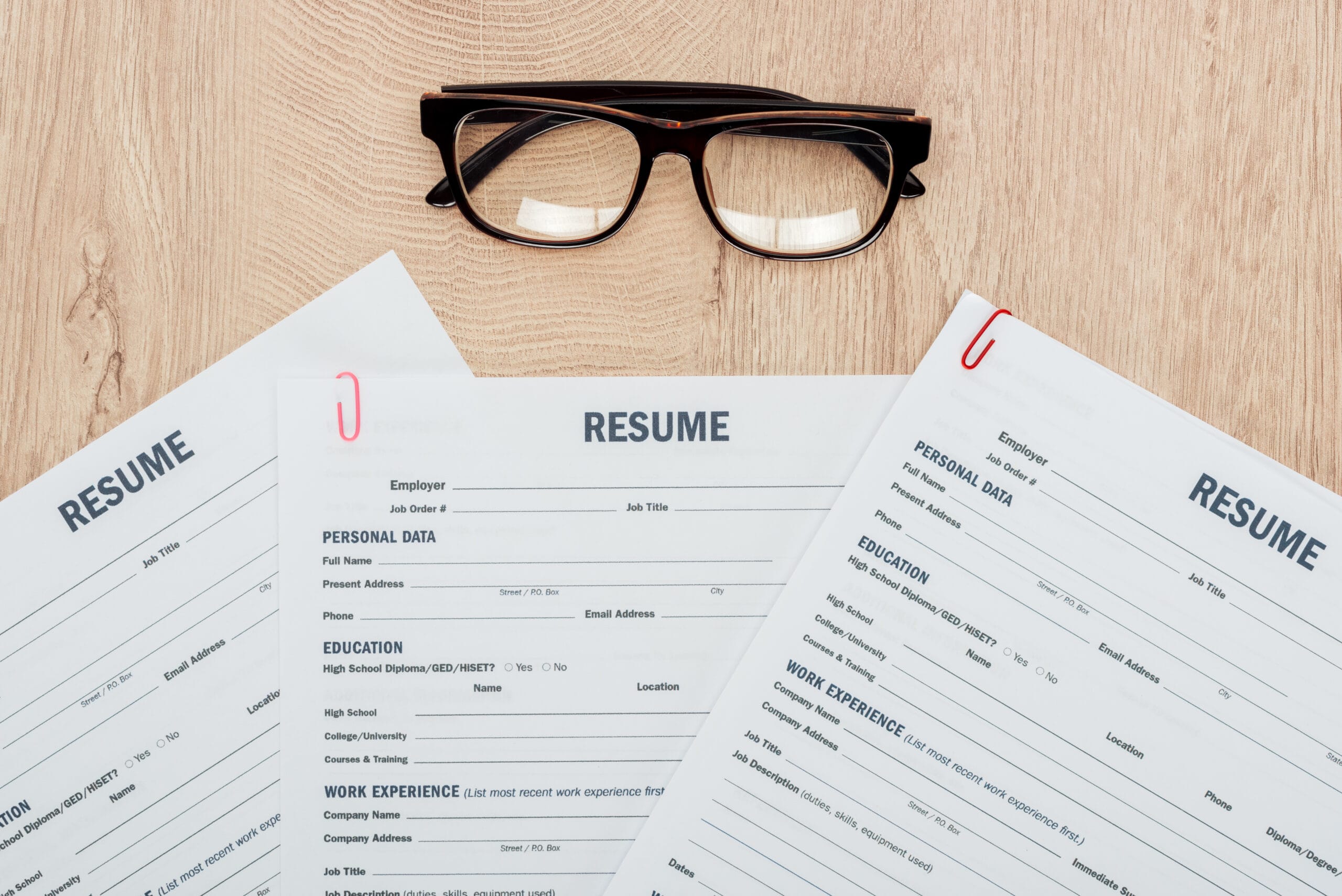
Let’s be brutally honest for a second. Applying for remote jobs right now often feels like throwing paper airplanes into a black hole. You spend forty-five minutes filling out a company’s internal application portal, hit submit, get an automated “we received your application” email, and then… absolute silence.
It’s incredibly frustrating. And the worst part? When you don’t get a rejection email, you have no feedback loop to figure out what went wrong.
You might assume that the market is just too competitive or that someone internal got the job. Sometimes that is true. But more often than not, highly qualified candidates are getting filtered out before a human hiring manager ever even glances at their application.
The transition from traditional office work to distributed teams has completely changed what hiring managers look for on a single page of text. What worked perfectly fine for a local, in-person job five years ago will actively get you disqualified from a remote role today.
Let’s break down exactly what is happening behind the scenes, and look at the five specific resume mistakes that are causing your applications to get tossed into the digital trash bin.
Table of Contents

The Mindset Shift: Local vs. Remote Hiring
Before we get into the list, you need to understand the fundamental difference in how remote companies hire.
When a company hires locally, their talent pool is restricted to people living within a 30-mile radius of their office. They might get 50 to 100 applications for a role. A hiring manager can easily sip their morning coffee and manually read through 50 resumes.
When a company opens a role as “Remote,” their talent pool suddenly becomes the entire country, or even the entire planet. That same job posting might receive 3,000 applications in the first 48 hours.
Because of this sheer volume, remote companies rely heavily on Applicant Tracking Systems (ATS) and aggressive filtering to narrow those 3,000 people down to 20 viable candidates. You are no longer just trying to impress a hiring manager; you are trying to survive a brutal filtering process.
Most of the resume mistakes we are about to cover are tied directly to failing this initial filter, or failing to prove you can handle the autonomy of remote work.

1. The “Location” Trap and Ignoring Time Zones
One of the most immediate resume mistakes candidates make right at the very top of their document is completely misunderstanding what “Remote” actually means to an employer.
A lot of applicants will list their location simply as “Remote” or leave their physical location off the document entirely, assuming that because the job is work-from-home, where they live doesn’t matter.
This is a massive red flag for HR departments.
Why? Because of taxes, labor laws, and time zones. A company based in California might be happy to hire remote workers, but they might only be legally set up to pay taxes and handle payroll for employees living in specific states or countries. Furthermore, if a job requires heavy collaboration with a team in New York, they need someone who is awake during Eastern Standard Time. If they don’t know where you are, they assume you are a compliance risk and will move to the next candidate.
The Fix: Always list your actual physical location, but format it to show you are ready for remote work.
- Bad Example: Location: Remote
- Good Example: Location: Austin, TX (Open to fully remote and working across EST/PST time zones)
This tells the ATS exactly where you are for tax purposes, and tells the hiring manager you are already thinking about how you fit into their daily workflow.

2. Failing to Prove You Can Work Asynchronously
In a traditional office, if you get stuck on a problem, you can swivel your chair around and tap your manager on the shoulder. In a remote environment, your manager might be asleep in a different country when you hit a roadblock.
Remote teams survive on asynchronous communication—the ability to keep projects moving forward without needing real-time replies. They rely on written documentation, heavily detailed project management tickets, and self-direction.
If your resume just says “Great communicator” or “Team player,” you are making one of the most common resume mistakes in the remote space. Those are empty buzzwords. You need to prove you don’t need a manager breathing down your neck to get things done.
The Fix: Highlight the tools and methodologies that prove you understand remote infrastructure. You want to weave in your experience with asynchronous tools like Slack, Jira, Notion, Asana, or Loom.
- Bad Example: “Communicated daily with team members to ensure project success.”
- Good Example: “Managed cross-functional projects across 3 time zones using asynchronous communication in Slack and detailed technical documentation in Notion, reducing the need for weekly update meetings by 40%.”

3. Creating a Format That “Breaks” the ATS
Let’s talk about the software reading your resume before a human does. Applicant Tracking Systems parse the text on your PDF to figure out your job history, skills, and contact info.
If you went onto Canva and downloaded a beautiful, heavily designed resume template with two columns, a sidebar, custom icons, and a photo of yourself—you are shooting yourself in the foot.
These graphic-heavy templates confuse ATS software. The parser reads left to right, top to bottom. When it encounters two columns, it mashes the text together into a giant, unreadable paragraph. If the ATS can’t read your job title, it automatically rejects you. Relying on visual flair instead of clean text is one of the most fatal resume mistakes you can make.
The Fix: Keep it incredibly boring visually. You want a single-column layout. Use standard, web-safe fonts like Arial, Calibri, or Garamond. Use standard headers like “Work Experience” and “Education” (don’t use quirky headers like “My Journey” because the ATS won’t know what that means).
If you are a designer and feel the need to show off your visual skills, do that in your portfolio. Your resume’s only job is to bypass the robot.
4. The “Kitchen Sink” Skills Section
Because remote roles are so competitive, candidates often panic and try to be everything to everyone. They will list 45 different skills at the bottom of their resume, ranging from advanced Python development to Microsoft Word and “empathy.”
This is the “kitchen sink” approach, and it actively dilutes your expertise.
When a hiring manager is looking for a senior backend developer, and they see a resume that lists Node.js right next to “social media marketing” and “customer service,” they don’t think you are multi-talented. They think you are unfocused.
To avoid these types of resume mistakes, you have to curate your skills ruthlessly based on the specific job description you are applying for.
The Fix: Mirror the job description. If the job requires expertise in automated workflows, Docker, and API integrations, those should be the very first things in your skills section. Delete the filler. Nobody needs to know you are proficient in Microsoft Office in 2026; that is assumed.
- Bad Example: Skills: HTML, CSS, JavaScript, Leadership, Microsoft Excel, Social Media, Problem Solving, Hard Worker, API Design.
- Good Example: Technical Skills: JavaScript (Node.js, React), API Integration & Design, Server Automation (n8n, Docker), Database Architecture (PostgreSQL).
5. Listing Duties Instead of Outcomes
In a physical office, management often measures your value by whether or not you are sitting at your desk looking busy at 3:00 PM. It’s a terrible management style, but it’s the reality of corporate life.
In a remote company, nobody can see you typing. The only thing they can see is your output. Therefore, remote hiring managers don’t care what your daily responsibilities were; they only care about what you actually achieved.
One of the most persistent resume mistakes is writing bullet points that read like a job description instead of a highlight reel. Starting your bullet points with “Responsible for…” or “Tasked with…” puts the reader to sleep. It tells them what you were supposed to do, not how well you did it.
The Fix: Use the X-Y-Z formula championed by Google recruiters: “Accomplished [X] as measured by [Y], by doing [Z].” Every single bullet point under your work history should include a metric, a number, or a concrete result.
- Bad Example: Responsible for managing the company’s email marketing newsletter and growing the subscriber list.
- Good Example: Grew the weekly email newsletter from 2,000 to 15,000 active subscribers over 8 months by designing and implementing automated A/B testing workflows, resulting in a 22% increase in monthly recurring revenue.
See the difference? The first one is a duty. The second one is an undeniable, metric-driven outcome that proves you can generate value without supervision.

How to Fix These Resume Mistakes Before Your Next Application
Fixing these resume mistakes doesn’t mean you have to rewrite your entire career history from scratch. It just requires a shift in perspective. You are no longer just listing where you worked; you are building a targeted marketing document that proves you are a low-risk, high-reward hire for a distributed team.
Take an hour this weekend to strip away the complex formatting from your document. Convert it to a clean, single-column layout. Read through your bullet points and ask yourself, “Does this sound like I need a manager to hold my hand, or does this prove I can take ownership of a project?”
Inject numbers where things are vague. Clarify your time zone and your ability to work asynchronously. Cut the fluff from your skills section.
The remote job market is crowded, yes. But the truth is that 80% of the applications flooding in are poorly formatted, untargeted, and making the exact errors we just outlined. By simply cleaning up your document and speaking the language of remote work, you instantly vault yourself into the top 20% of candidates. When you are ready to test it out, head over to our live job board to explore hundreds of hand-picked remote opportunities updated daily.
Stop letting easily fixable errors dictate your career trajectory. Audit your resume, tighten up your metrics, and watch how quickly the silence from those application portals turns into interview requests.