
You stare at the two-year hole on your resume. It feels like a neon sign flashing “unreliable.” You worry that every recruiter thinks you were sitting on your couch eating cereal and playing video games. Stop. Breathe. It isn’t 1955.
The stigma around having a career gap when applying for remote tech roles is largely a ghost of the past. Life happens. People get burned out. Parents get sick. Kids need care. Sometimes, you just need to step away from the Jira tickets to keep your sanity.
But here is the catch. Remote managers are inherently risk-averse. They can’t see you. They can’t walk by your desk to check your vibe. They need to know that your career gap when applying for remote tech roles wasn’t a total loss of momentum.
You need a strategy to flip the narrative. You aren’t a “quitter.” You are a professional who took a strategic hiatus.
Let’s break down exactly how to handle a career gap when applying for remote tech roles so you can stop apologizing and start getting hired.
Table of Contents

Why Remote Managers Fear the Gap
Before you fix it, you have to understand the “why.”
When you have a career gap when applying for remote tech roles, a hiring manager has one primary fear: skill rot. Tech moves fast. A year away from React or AWS feels like a decade. They worry you’ve forgotten how to handle a deployment or that you’ve lost your edge in a distributed environment.
Remote work requires extreme self-discipline. If you have a career gap when applying for remote tech roles, they might wonder if you can still manage your own schedule without a boss breathing down your neck.
Your job is to prove that your “off” time was actually “active” time. You need to show that while you weren’t on a payroll, you were still part of the ecosystem.
According to research on modern hiring trends from the Harvard Business Review, employers are increasingly looking for “proof of life” during gaps. They want to see that you didn’t just disappear.
The Golden Rule: Never Lie
Do not “stretch” your dates. Do not invent a fake freelance business.
Background checks are ruthless. If a recruiter finds out you lied about the length of a career gap when applying for remote tech roles, you are blacklisted. Period.
Honesty is actually your biggest leverage. It shows integrity. Remote companies hire for trust above all else. If they can’t trust your resume, they can’t trust you with their Slack credentials.
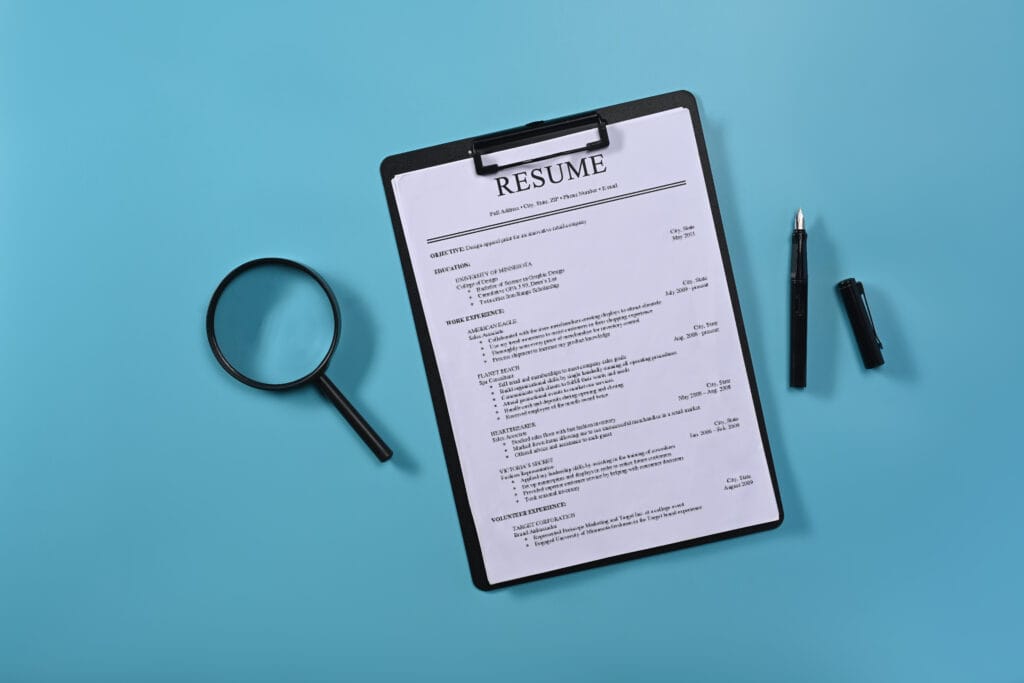
Step 1: Own the Narrative on Your Resume
Don’t leave a blank space. Blank spaces invite the worst assumptions.
If you have a career gap when applying for remote tech roles, fill that space with a “Career Break” or “Sabbatical” entry. Format it exactly like a job. Include a title, dates, and a one-sentence explanation.
- Family Care: “Took a planned break to manage a family health matter; maintained technical proficiency through independent study.”
- Upskilling: “Dedicated sabbatical focused on mastering Python and cloud architecture via AWS certifications.”
- Personal Growth: “Planned travel sabbatical; managed logistical challenges across 12 countries while contributing to open-source projects.”
By listing it, you control the story. You show that the career gap when applying for remote tech roles was a choice, not an accident.
You can then browse our live remote job feed and see which companies specifically look for “non-linear” backgrounds. Many startups actually value the maturity that comes from a life-led break.
Step 2: The “Proof of Life” Strategy
You must prove your brain didn’t turn to mush. This is the most effective way to handle a career gap when applying for remote tech roles.
If you were out for six months, show me what you built. Did you contribute to an open-source repo on GitHub? Did you rebuild your portfolio using Next.js and Tailwind CSS?
Remote managers love seeing that you remained a “tinkerer.” It proves you have an internal motor.
If your career gap when applying for remote tech roles was due to burnout, talk about the specific tech books you read or the newsletters you followed to stay current with Vercel or Supabase updates.
- Specific Example: “During my break, I migrated my personal project from a legacy PostgreSQL instance to PlanetScale to learn about distributed database scaling.”
This turns a weakness into a technical discussion. It stops the recruiter from asking about the “why” and starts them asking about the “how.”
Step 3: Handling the “The Gap” in the Interview
The question will come. “I noticed you weren’t working from 2023 to 2024. Can you tell me about that?”
Do not stumble. Do not look at your shoes. Look into the Zoom camera and be direct.
The secret to explaining a career gap when applying for remote tech roles is the 80/20 rule. Spend 20% of your time explaining the reason for the gap and 80% explaining why you are ready to come back.
The Script: “I took a year off to focus on a personal family obligation that required my full attention. It was a productive time, and I’m grateful I had the stability to handle it. During that time, I also spent about 10 hours a week staying sharp on TypeScript and built a small automation tool for Discord. I’m now fully available and incredibly excited to apply my skills to a fast-moving team again.”
Short. Honest. Boring.
You want the reason for your career gap when applying for remote tech roles to be the least interesting part of the interview.
Step 4: Focus on the “Remote-Ready” Skills
A common worry with a career gap when applying for remote tech roles is that you’ve lost your “remote legs.”
Managers worry you’ve forgotten how to use Trello or Asana. They worry you’ll be lonely or unorganized.
To counter this, emphasize how you managed your life during the gap. Did you use Notion to track your family’s medical appointments? Did you use Google Calendar to schedule your upskilling blocks?
Mentioning these tools proves you still have the “remote operating system” installed.
According to Forbes, “soft skills” like self-management are more vital in remote work than in any other field. Use your career gap when applying for remote tech roles to highlight those exact traits.
Step 5: Leverage Freelancing or Consulting
If your career gap when applying for remote tech roles was longer than a year, you need to show some form of professional engagement.
Did you help a friend with their Shopify store? Did you do a small bug fix for a local non-profit?
That is “Freelance Consulting.”
List it on your resume. It fills the visual hole and proves you were still taking orders, meeting deadlines, and delivering code. It doesn’t matter if it was only 5 hours a month. It breaks the “unemployed” spell.
When you filter roles by your tech stack on our site, you can look for contract roles first. Contracts are a great way to “warm up” after a career gap when applying for remote tech roles before committing to a full-time salaried position.
The Health/Burnout Gap: A Special Note
Let’s be brutally honest. Many people have a career gap when applying for remote tech roles because the tech industry chewed them up and spat them out.
Burnout is real. Mental health matters.
However, you do not have to share your medical history in an interview. You are not legally required to.
If you had a career gap when applying for remote tech roles because of health, simply call it a “Health Sabbatical.”
“I took a six-month sabbatical to focus on a personal health matter. I’ve fully resolved that, and I’m returning to the workforce with more focus and energy than I’ve had in years.”
That’s it. Stop talking. If the interviewer pushes for details, they are overstepping. Most professional remote managers will respect that boundary.
Use Your Cover Letter to Address the Elephant
If you are applying for a highly competitive role, your cover letter is the place to head off concerns about a career gap when applying for remote tech roles.
Don’t hide it in the third paragraph. Address it early, but keep it positive.
“After a deliberate 12-month break to focus on upskilling in Rust and distributed systems, I am eager to bring my refreshed perspective to [Company Name].”
This shows confidence. It tells the recruiter, “I know there’s a gap, I’m not ashamed of it, and here’s why I’m a better engineer because of it.”
It also helps to create a free profile to save jobs so you can track which companies are “gap-friendly.” Some companies, especially those with an “Asynchronous First” culture, care more about your GitHub than your timeline.

Technical Proof Beats Chronological Anxiety
At the end of the day, code talks.
If you have a two-year career gap when applying for remote tech roles, but you can pass a live coding interview in JavaScript without breaking a sweat, the gap disappears.
The gap only matters if your skills are also lagging.
If you are worried, spend two weeks doing an intensive “re-entry” camp for yourself.
- Build a full-stack app using Supabase and React.
- Document the process on X (formerly Twitter).
- Post the repo link in your resume header.
This creates a “recent win.” It gives the recruiter something to talk about other than your career gap when applying for remote tech roles.
Don’t Over-Explain
This is the biggest mistake candidates make. They feel guilty, so they start rambling.
“Well, you see, my aunt’s cat got sick, and then the car broke down, and I just felt like I needed to find myself, so I…”
Stop. You are sounding like a liability.
Keep your explanation of a career gap when applying for remote tech roles to under 30 seconds. Be concise. Be professional. Then, pivot back to the job.
“I took a planned break for personal reasons. It allowed me to come back with a very clear focus on [Specific Tech Skill]. I’m now looking to apply that focus to your team’s current challenge with [Specific Problem].”
The more you talk about the gap, the bigger it looks. The less you talk about it, the more it seems like a normal part of a long career.
The Digital Nomad Gap
Did you spend a year traveling the world? That isn’t a career gap when applying for remote tech roles. That is a masterclass in remote logistics.
Explain how you managed unstable Wi-Fi, time zone shifts, and working from coworking spaces.
“During my year-long travel sabbatical, I maintained a freelance client base while working across four different time zones. I learned how to be hyper-efficient with my time and mastered asynchronous communication via Slack and Loom.”
This makes you look like a remote work pro. It proves you can handle the “work” part of “work from anywhere.”

Closing the Gap
You are more than a timeline. A career gap when applying for remote tech roles is only a problem if you let it be one. If you treat it like a secret shame, the recruiter will too. If you treat it as a productive, necessary, and well-managed part of your life, they will respect your maturity.
Tech is a meritocracy. If you can do the work, you will get the job.
Fix your resume. Build your “proof of life” projects. Practice your 30-second script. Then, get back out there.
The remote world is waiting for you.